Brazilian coffees have low acidity, a nutty-chocolate profile, and full body — ideal characteristics for espresso. They pair well with darker roast profiles and produce a rich crema. The majority of espresso blends worldwide use Brazilian coffee as their base.
Yes, Brazil is the world's largest coffee producer, accounting for roughly one-third of global output. Vast growing regions like Minas Gerais, Sao Paulo, and Bahia, combined with mechanized harvesting and large-scale processing, sustain this leading position.
Natural (dry) processing means the coffee cherries are dried in the sun with the fruit still on the bean. This method is common in Brazil and imparts sweet, fruity flavors and a heavier body. Nutty, dark chocolate, and dried fruit notes are typical of a Natural Brazilian profile.
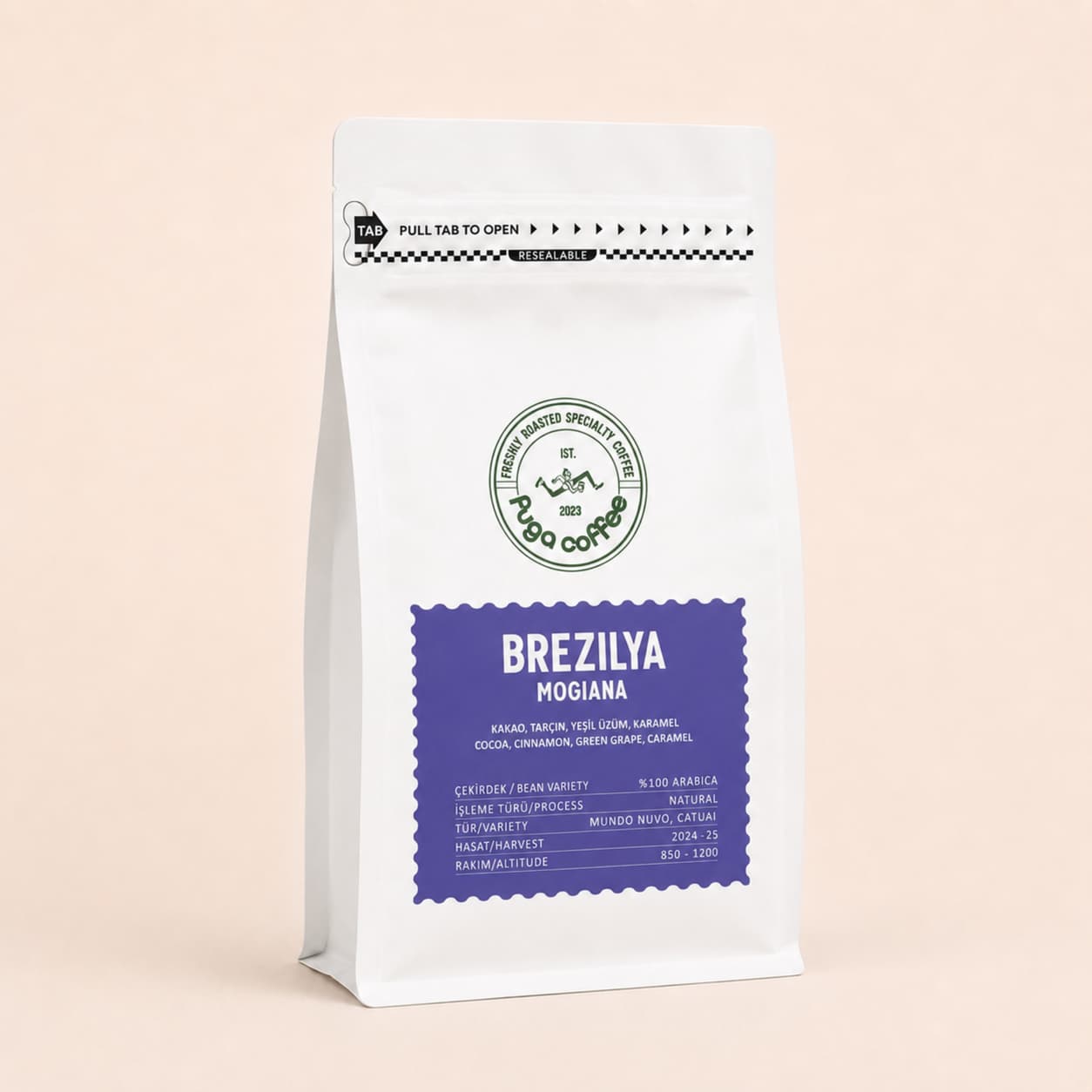
Brazil has been the world’s largest coffee producer for over 150 years, supplying roughly 35-40% of global output. Known for low acidity, nutty sweetness, and rich chocolate and caramel notes, Brazilian coffee excels in espresso blends and cold brew. Minas Gerais, Sao Paulo, and Bahia are the primary growing states.
Brazil dominates global coffee production by volume — but size alone does not tell the full story. Over the past two decades, the country has made remarkable strides in specialty-grade quality. Regions like Cerrado Mineiro, Mogiana, and Sul de Minas now regularly produce lots scoring 84 and above on SCA evaluations.
What sets Brazilian coffee apart is its naturally low acidity. Grown at comparatively modest altitudes of 800 to 1,400 meters, the beans develop less brightness than their East African counterparts but compensate with a fuller body and deeper sweetness. This profile makes Brazil the go-to origin for espresso — the chocolate and caramel notes cut through milk effortlessly.
Natural processing is the dominant method in Brazil. Cherries dried whole under the sun absorb residual fruit sugars, creating a naturally sweet cup with notes of roasted nuts, dark chocolate, and dried stone fruit. Pulped natural — a semi-washed technique pioneered in Brazil — offers a cleaner variant that retains much of that inherent sweetness.
Brazilian beans truly excel in cold brew applications. The low acidity and natural sweetness translate into a remarkably smooth and full-bodied concentrate, even without any added sugar.
Brazil’s low acidity and full body make it a natural fit for espresso extraction and cold brew concentrate alike.
Brazilian beans perform best in the medium and medium-dark range, where chocolate and nut flavors are most pronounced.
Naturally processed Brazilian coffees offer inherent sweetness and dried-fruit character — perfect for those who enjoy their coffee sweet without adding sugar.
“Brazil provides the body and sweetness foundation in our espresso blends. A natural-process lot from Cerrado Mineiro — hazelnut, dark chocolate, and caramel — is flawless in a milk-based drink.”— Fuga Coffee Roasting Team