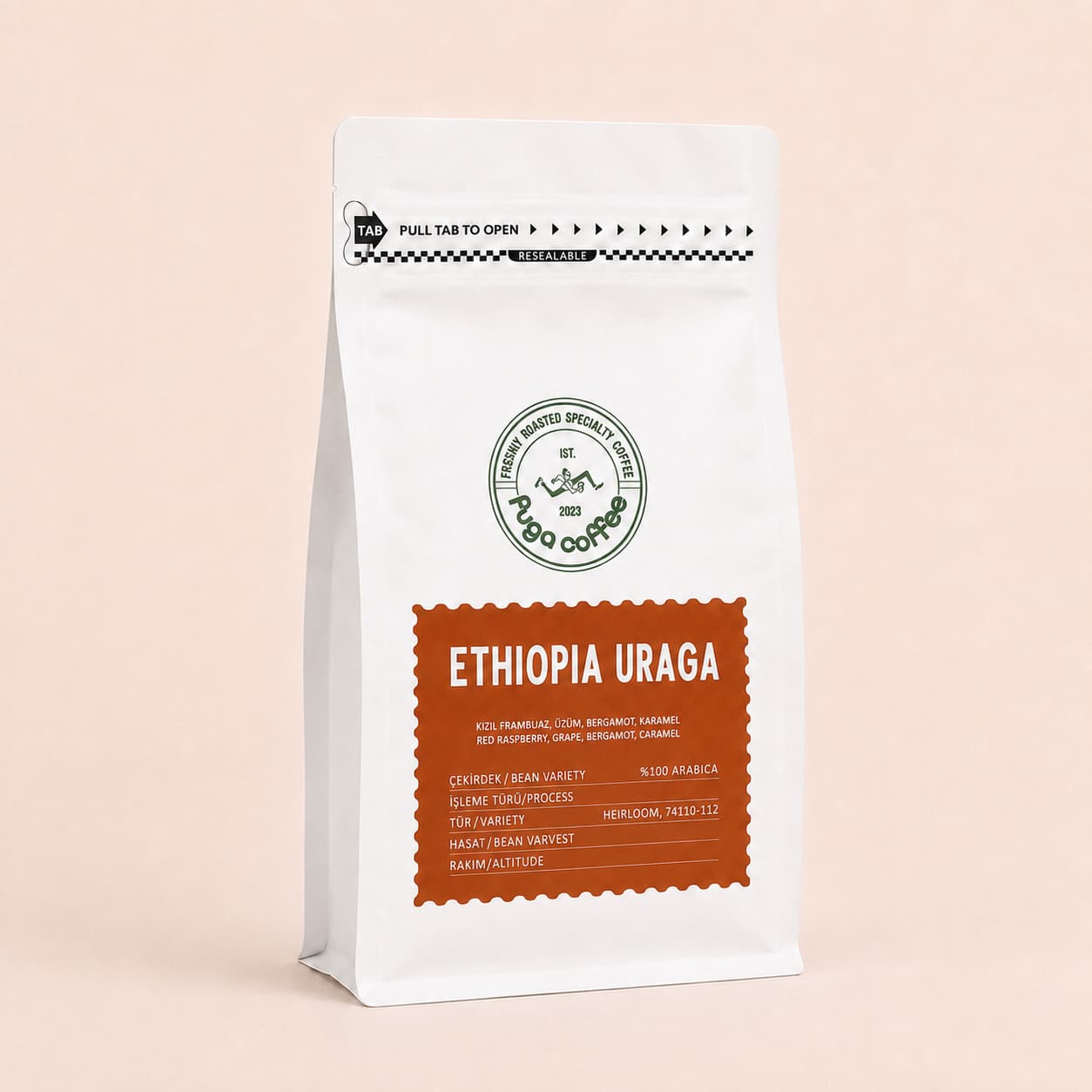
Ethiopian coffees are known for their fruity, floral, and bright acidity. Yirgacheffe offers lemon, jasmine, and bergamot notes, while Guji delivers tropical fruit and chocolate tones. Sidamo stands out with blueberry and peach characteristics.
The oldest known wild coffee plants grow naturally in Ethiopia. Legend has it that a 9th-century goat herder named Kaldi noticed his goats became energetic after eating coffee cherries. Today, Ethiopia remains the most genetically diverse coffee-growing region in the world.
Washed processing produces a clean, bright cup where floral and citrus notes shine through. Natural (dry) processing involves drying the whole cherry, resulting in a sweeter, more intense cup with berry and strawberry notes. Both methods contribute to what makes Ethiopian coffee so unique.
Ethiopia is the birthplace of coffee — Coffea arabica was first discovered growing wild in its highland forests. Celebrated regions like Yirgacheffe, Sidamo, and Guji produce intensely aromatic cups with floral, fruity, and tea-like qualities that consistently score 85+ on SCA evaluations.
Ethiopia stands alone in the coffee world. No other country offers such extraordinary genetic diversity — thousands of indigenous heirloom varieties still grow in natural forest ecosystems, most yet to be formally classified by botanists. This wild heritage gives Ethiopian coffee an aromatic complexity that cultivated varieties in other countries simply cannot replicate.
The regional profiles are strikingly distinct. Yirgacheffe delivers jasmine, bergamot, and stone fruit when given a light roast — an almost perfume-like aromatic experience. Sidamo offers a more balanced cup with caramel sweetness and citrus brightness, while Guji has emerged as the new frontier with tropical fruit and blueberry intensity. The Harar region, one of the oldest coffee-producing areas in the world, is known for its naturally processed beans with bold strawberry and wine-like fermentation notes.
Processing method makes a dramatic difference with Ethiopian beans. Washed coffees are clean, bright, and translucent — letting terroir and varietal character shine through. Natural process Ethiopians are an entirely different experience: heavy fruit sweetness, fermented berry notes, and a syrupy body. Tasting both side by side from the same region is one of specialty coffee’s most eye-opening exercises.
Ethiopian beans shine brightest at light to medium-light roast levels. Darker roasts mask the delicate floral and fruit notes that make this origin exceptional.
Pour-over methods are the ideal match for Ethiopian coffees. The clean extraction highlights their vibrant acidity and layered aromatic character.
Try both processing methods from the same region side by side. It is one of the best ways to understand how post-harvest processing shapes flavor in the cup.
“Ethiopia surprises us every season. Even lots from the same Yirgacheffe cooperative can reveal entirely new flavor notes year to year. That unpredictability is what makes specialty coffee so thrilling.”— Fuga Coffee Roasting Team