Free shipping on orders over 1,000 TLShipped within 48 hours of roast dateSpecialty grade SCA 80+ beansFree shipping on orders over 1,000 TLShipped within 48 hours of roast dateSpecialty grade SCA 80+ beans
Recipe
How to Make Turkish Coffee: Traditional Recipe and Foam Secrets
AuthorFuga Coffee7 min read
How to Make Turkish Coffee: Traditional Recipe and Foam Secrets
What Is Turkish Coffee?
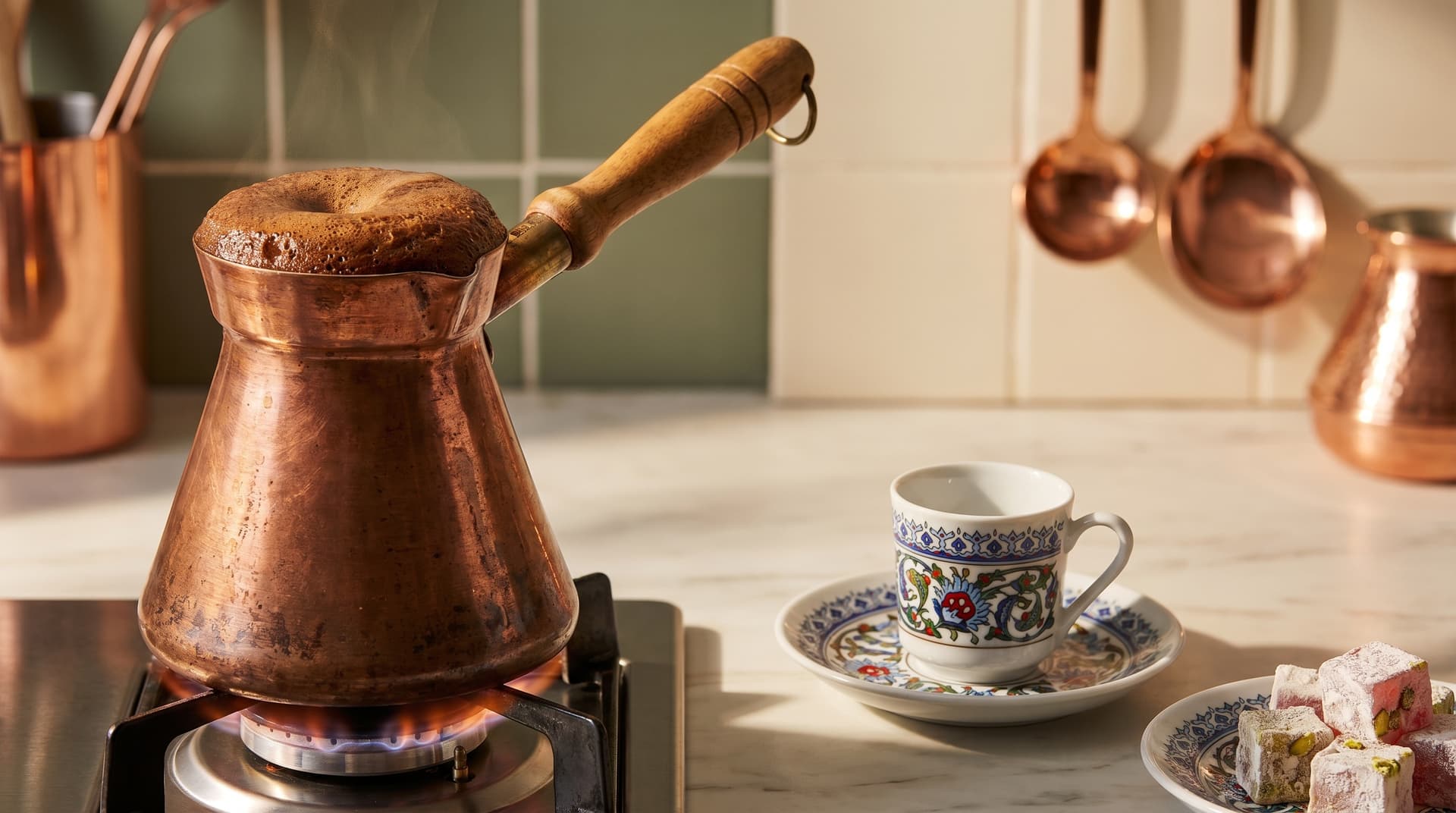
Turkish coffee has been on the UNESCO Intangible Cultural Heritage list since 2013. It is a traditional brewing method dating back to the 16th century in Anatolia, where powder-fine ground coffee is cooked in a special pot called cezve (also known as ibrik) using a precise technique.
3 Defining Features of Turkish Coffee
Drunk with grounds — coffee and grounds remain in the cup (no filtering)
Powder-fine grind — flour-like consistency, the finest grind in the coffee world
Heated, not boiled — boiling water destroys the taste; controlled heating is essential
Turkish Coffee Recipe
Ingredients (per cup)
- 1 standard Turkish coffee cup (60-70ml) of cold water
- 1.5-2 teaspoons (7-8g) powder-fine ground Turkish coffee
- Sugar (none, light, medium, sweet)
- Cezve (50-100ml capacity, for 1-2 cups)
- Stove (gas or electric)
Step-by-Step Traditional Recipe
Step 1: Measure Water Use your serving cup as the measure. Fill the cup with water, pour into cezve. 60-70ml per cup.
Step 2: Add Sugar Sugar preferences: - Sade (plain): No sugar - Az (light): Half teaspoon (~2.5g) - Orta (medium): 1 teaspoon (~5g) - 2 teaspoons (~10g)
Çok (sweet):
Important: Sugar is added at the start, never afterward!
Step 3: Add Coffee — DO NOT STIR Sprinkle coffee on top of the water. Do not stir — critical for foam. The coffee should float on the surface.
Step 4: Place on Low Heat Put the cezve on low heat. High flame = burnt, bitter coffee. Be patient, it takes 3-5 minutes.
Step 5: Stir Gently When coffee starts mixing into the water (after 1-2 min), gently stir with a coffee spoon. A few turns, then stop. Don't disturb the foam.
Step 6: Foam Formation After 4-5 minutes, the surface starts to rise — small bubbles appear. This is the foam (köpük) forming.
Step 7: DO NOT BOIL! When the foam rises near the rim of the cezve, remove from heat IMMEDIATELY. If you boil: - Foam dissipates - Taste is ruined - Coffee becomes bitter
Step 8: Distribute Foam to Cups First, spoon the foam into each cup (equal portions). Then slowly pour the coffee — foam should remain on top.
Step 9: Serve Accompanied by: - 1 glass of water (sip before coffee, cleanses palate) - 1 piece of Turkish delight (lokum is classic)
The Foam Secret
The signature of Turkish coffee is abundant foam. The 5 secrets to perfect foam:
Secret 1: Cold Water Is Essential
Never start with hot water. Cold water heats the coffee slowly, releasing aromas, allowing foam to form properly.
Secret 2: No Stirring
Don't stir at the initial addition. During cooking, only stir very gently to distribute.
Secret 3: Low Heat
The slower, the more foam. High heat causes boiling before foam can form.
Secret 4: Cezve Volume
Your cezve should be 75-80% full. Too full = overflows. Too empty = no foam.
Traditional Style
Cezve cooking on a stovetop, the recipe above.
Mırra (Southeastern Anatolia)
- Double-roasted coffee
- No sugar
- Very intense
- Served in tiny cups
- Strong cultural significance in Şanlıurfa region
Menengiç Coffee (Gaziantep)
- Made from terebinth tree fruit
- Not actually coffee — caffeine-free
- Served with milk
- Local specialty
Dibek Coffee
- Stone-ground (not machine)
- Slightly coarser (still fine)
- Said to be more aromatic
- Traditional preparation
Foamy vs Non-Foamy
Some prefer foamless Turkish coffee (easier sipping). For foamless, you can stir from the beginning.
Best Beans for Turkish Coffee
When choosing beans for Turkish coffee: - Medium-dark roast (bitterness is balanced) - Low acidity profiles - Chocolate, nutty notes - Brazilian origin most common
Turkish coffee comes pre-ground, goes stale very quickly: - After opening, transfer to an airtight jar - Finish within 1 week - DO NOT refrigerate
Coffee Fortune Telling (Fal)
An inseparable part of Turkish coffee tradition: 1. Drink the coffee 2. Place the cup upside down on the saucer (grounds drip down) 3. Wait until cool 4. Turn the cup right-side up 5. Read your fortune from the patterns left by the grounds
Coffee fortune telling is for entertainment, not to be taken seriously!
Common Mistakes
Mistake
Result
Fix
Boiling
Foam dies, bitter
Remove when rising
Hot water
Aromas escape
Cold water mandatory
High heat
Burnt taste, no foam
Low heat
Stirring early
No foam forms
Don't stir initially
Coarse grind
Grounds settle fast
Powder-fine essential
Stale coffee
No aroma
Finish within 1 week
FAQ
Can I make Turkish coffee with a regular grinder? Most home grinders cannot achieve Turkish-fine grind. Buy pre-ground Turkish coffee or invest in a Turkish-specific grinder (Sözen, Turkish manual mills).
Why use copper specifically? Copper's thermal conductivity is the highest among common cookware metals. This even heat distribution is critical for the slow rise that creates foam.
Can I use an electric stove? Yes, but use the smallest burner on lowest setting. Gas gives more control, but electric works with practice.
How is Turkish coffee different from Greek/Arabic coffee? They share the same basic technique — they are essentially regional variations of the same Ottoman-era brewing method. Greek coffee is identical; Arabic coffee often includes cardamom.