Free shipping on orders over 1,000 TLShipped within 48 hours of roast dateSpecialty grade SCA 80+ beansFree shipping on orders over 1,000 TLShipped within 48 hours of roast dateSpecialty grade SCA 80+ beans
Origin
What Kind of Coffee Beans Are Used to Make Turkish Coffee? The Truth Behind the Cup
AuthorFuga Coffee4 min read
What Kind of Coffee Beans Are Used to Make Turkish Coffee? The Truth Behind the Cup
Have you ever thought about it when you pick up your morning cup?
What kind of lands does that dark, rich, foamy drink carry within it?
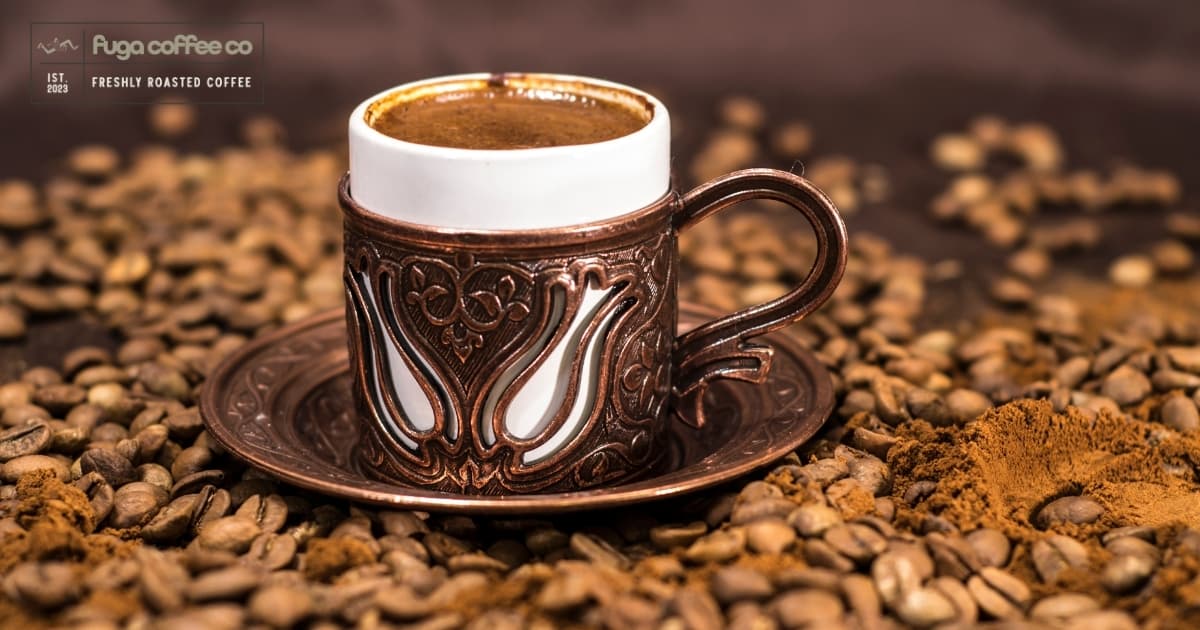
Turkish coffee is a brewing method. But the choice of bean is what turns that cup from ordinary into unforgettable.
Most people don’t know this. We want you to know.
There Is No Such Thing as a “Turkish Coffee Bean”
Let’s start with the first truth: when a supermarket package says “Turkish coffee,” it refers to a brewing format, not the origin of the bean.
Turkish coffee = finely ground coffee + brewing in a cezve.
The bean? In theory, it can come from any country, any altitude, and any processing method.
But in practice, choosing the right bean for a good Turkish coffee comes down to three critical criteria:
Full body Low acidity Long finish — the time the flavor lingers on the palate
The Classic Choice: Medium-Roasted Arabica
Historically, Turkish coffee was shaped by Arabica beans from Yemen and Ethiopia. During the period when coffee reached Europe through the Ottoman Empire, the beans used largely came from these regions.
Why Arabica?
It has a more complex aroma compared to Robusta. A medium roast maintains balance against the heat created by cezve brewing. A very light roast means higher acidity, which can become harsh during longer brewing. A very dark roast makes bitterness dominant and causes nuance to disappear.
Fuga’s perspective: For our Turkish coffee, we use 100% Arabica beans in the medium-dark roast range. There is body, there is sweetness, and even the grounds at the bottom of the cup smell beautiful.
Ethiopia: From the Birthplace of Coffee to Your Cup
If you are looking for a truly good Turkish coffee, you should look at Ethiopian beans.
The Yirgacheffe and Sidamo regions produce fruity, chocolatey notes through the natural processing method. These notes open up beautifully in cezve brewing.
Coffee cherry aroma Dried fig and dark fruit Long, sweet finish
When brewed in a cezve, these beans show a different character than a light-roasted espresso. They become rounder, warmer, and more intimate.
Brazil: The Home of Reliable Body
If consistency is what you want in Turkish coffee, Brazilian Santos or Cerrado beans come into play.
Hazelnut, chocolate, and caramel notes Low acidity, ideal for the longer contact time in cezve brewing High body, creating a dense texture and creamy mouthfeel
Especially in blend production, Brazilian beans create a solid base. Many commercial Turkish coffee brands contain a Brazilian component, but the real difference comes from roast quality and the freshness of the beans.
Robusta Addition: Yes or No?
This is the controversial part.
Some masters add 10–20% Robusta to Turkish coffee blends. The reasoning is:
More intense foam, similar to crema Higher caffeine Lower cost
But there is a price:
Woody, rubbery, burnt notes Unpleasant bitterness when the roast quality is low The risk of overpowering Arabica’s aromatic character
Fuga’s stance: If Robusta is going to be used, it should be specialty-grade, high-altitude, and well-processed. Not to cut costs, but to complete the character.
Roast Level: The Hidden Variable of Turkish Coffee
Take the same Ethiopian bean. Roast it light, medium, and dark.
Three different cups.
For Turkish coffee, the medium to medium-dark roast range is considered the sweet spot:
Light roast: High acidity; not balanced during longer cezve contact Medium roast: Complex aroma and balanced bitterness Medium-dark roast: Full body, low acidity, long finish Dark roast: Dominant bitterness, loss of aroma, risk of burnt notes
Grinding: Grind the Bean Right, Don’t Brew It Wrong
Even the best bean can be ruined by the wrong grind.
For Turkish coffee, the grind should be as fine as powdered sugar, or even finer. Industrial stone grinders or high-quality home conical burr grinders can achieve this level of fineness.
Blade grinder? No. It generates heat, creates inconsistent particle size, and damages the aroma.
At Fuga, beans are ground fresh on demand, on the same day. If you are making it at home, buy whole beans instead of pre-ground coffee and consume them within a week.
Fuga’s Approach to Turkish Coffee
We see Turkish coffee as a historical heritage. And respecting heritage does not mean leaving it in the past. It means carrying it into the present with the right ingredients.
For us, Turkish coffee means:
Specialty-grade beans with traceable origins Medium-dark roast, ground fresh on a stone grinder the same day Beans with enough aroma that they do not need cinnamon or cardamom Traditional cezve, low heat, and patience
Let your morning cup be in Levent. Look into the grounds, smile, and now know exactly what you are drinking.
Final Word: The Bean Is Not Everything, But Everything Starts with the Bean
Your Turkish coffee can be:
Ethiopian natural process: fruit, chocolate, long finish Brazilian Santos: round, caramel-like, reliable body Yemen Mocha: historical, earthy, spicy notes — rare, but special
Which one fascinates you?
Next time you are at Fuga, ask us. Let’s test it in the cezve.